

Buying an LED TV in Pakistan used to be simple. Pick a size, choose a brand, check the price — done.
That time is gone.
Today, buyers are flooded with terms like HDR, Dolby Vision, 4K, MEMC, Android TV, and Smart Features. Most people assume that more logos automatically mean better picture quality. That assumption usually leads to overpaying — and later, disappointment.
If you’re comparing LED TV prices in Pakistan or planning to buy an LED TV on installments, understanding what HDR and Dolby Vision actually do (and when they don’t) can save you from making an expensive mistake.
This guide explains everything in clear terms — while helping you make a confident buying decision.
Why Picture Quality Matters More Than Resolution Today
Almost every LED TV available now is 4K. Resolution alone no longer separates a good TV from a bad one.
What truly affects your viewing experience is:
- How bright the screen can get
- How deep blacks look in dark scenes
- How well colors hold detail
- How the TV adapts to different content
Streaming platforms like Netflix, YouTube, and Prime Video now deliver content mastered with higher contrast and brightness. A regular LED TV can play this content — but it won’t show it the way it’s meant to be seen.
That’s where HDR and Dolby Vision come in — if the TV hardware supports them properly.
What Is HDR in an LED TV?
HDR stands for High Dynamic Range.
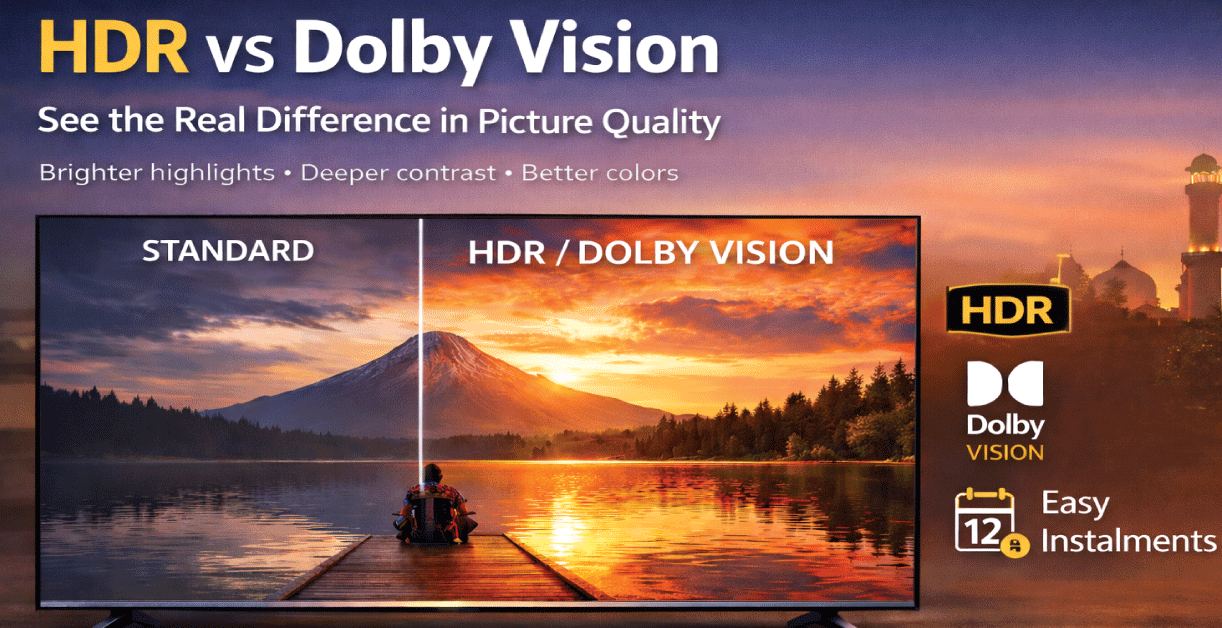
In simple words, HDR allows an LED TV to show a wider range between dark and bright areas on the screen. Instead of everything looking flat, HDR helps the picture feel more realistic.
With proper HDR:
- Sunlight looks bright instead of dull
- Dark scenes show detail instead of turning grey
- Colors appear more natural and balanced
On TVs without HDR, bright scenes often look faded, while dark scenes lose texture. HDR improves this balance — but only when the TV has the right hardware.
Why HDR Quality Varies from One LED TV to Another
HDR is not a setting you turn on. It’s a capability that depends on the TV’s build quality.
A TV can support HDR content on paper and still deliver weak results in real life. This is why many buyers say:
“HDR doesn’t look that different.”
The issue is usually not HDR — it’s insufficient brightness and contrast.
Does HDR Matter at Different LED TV Prices in Pakistan?
Budget LED TVs
HDR exists, but the effect is subtle. Improvements are visible, but not dramatic.
Mid-Range LED TVs
This is where HDR starts to feel meaningful. Better brightness and contrast allow highlights and shadows to stand out.
Higher-End LED TVs
HDR and Dolby Vision truly shine. Hardware finally matches the promise of the technology.
When comparing LED TV price in Pakistan, always look beyond labels and focus on real performance.
The “HDR Supported” Label: What It Really Means in Pakistan
In Pakistan, many entry-level LED TVs are marketed as “HDR Supported.” Technically, they can play HDR content — but most cannot display it properly.
Most budget LED TVs (around 40,000–70,000 PKR) peak at 250–300 nits of brightness.
Here’s the reality:
- Below 400 nits, HDR impact is barely visible
- Real HDR starts becoming noticeable around 600 nits and above
If a TV cannot physically get bright enough, HDR content may actually look dimmer than normal video.
Simple rule for buyers:
If HDR is mentioned but brightness (nits) is not clearly listed, the HDR logo is mostly decorative.
Types of HDR Formats Available in Pakistan
HDR10
The most common HDR format. It uses fixed brightness and contrast settings for the entire movie or show. It improves picture quality over standard video but does not adjust scene by scene.
HDR10+
An improved version that adjusts picture settings scene by scene. It offers better highlight control but has limited content support.
HDR Format Comparison (Buyer View)
| Feature | HDR10 | HDR10+ | Dolby Vision |
| Scene Adjustment | No | Yes | Yes (Frame-by-Frame) |
| Hardware Requirement | Medium | High | Very High |
| Impact on Budget TVs | Low | Low | Very Low |
| Best For | Regular viewing | Select HDR content | Movies & premium streaming |
| Worth Paying Extra | No | Sometimes | Only on strong panels |
VA vs IPS Panels: Why HDR Looks Better on Some TVs
Panel type plays a major role in HDR performance.
VA Panels
- Higher contrast
- Deeper blacks
- Stronger HDR impact
IPS Panels
- Wider viewing angles
- Lighter black levels
- Reduced HDR effect
In many cases, a mid-range VA panel LED TV delivers better HDR performance than a more expensive IPS panel without proper contrast control.
Why HDR Without Local Dimming Is Mostly Marketing
HDR relies on contrast — bright highlights next to deep blacks.
If a TV uses global dimming (the whole screen brightens or darkens together), true HDR performance is limited.
For meaningful HDR, look for:
- Full Array Local Dimming
- Or advanced Mini-LED backlighting
Without local dimming, HDR becomes more of a software trick than a real visual improvement.
Pakistan-Specific Factors Buyers Often Ignore
Bright Living Rooms
Strong daylight reduces contrast. TVs with weak brightness struggle, even with HDR enabled.
Voltage Fluctuations
Unstable power can affect long-term performance. Using stabilizers or UPS systems is especially important for premium TVs.
Screen Size vs Brightness
Large screens need stronger brightness. Bigger is not better if the panel cannot support it.
What is Dolby Vision?
The most advanced HDR format. It adjusts brightness, contrast, and colors frame by frame, delivering a more refined and cinematic image — when paired with capable hardware.
Most premium content on Netflix and Blu-ray uses Dolby Vision.
Dolby Vision on Entry-Level TVs: A Costly Mistake
Dolby Vision cannot fix weak hardware.
Putting Dolby Vision on a basic LED TV with:
- Low brightness
- No local dimming
- Entry-level processing
does not improve picture quality meaningfully.
Important advice:
Do not pay extra just for a Dolby Vision logo on an entry-level LED TV. In many cases, you’re paying for a license badge — not a visible upgrade.
So Which LED TV Should You Actually Buy?
If specs feel confusing, use this simple direction:
- Tight budget:
Choose a solid LED TV with good brightness and panel quality instead of chasing Dolby Vision logos. - Streaming-focused users:
Look for models where HDR or Dolby Vision is backed by real brightness and contrast. - Long-term buyers on installments:
It’s smarter to upgrade quality (QLED or Mini-LED categories) rather than buying a larger basic LED.
At Lahore Centre, available models are selected with these real-world factors in mind — so buyers don’t have to decode technical jargon themselves.
Top TCL LED TV with Dolby Vision and HDR Support
If you’re looking for a LED TV that offers both Dolby Vision and HDR without moving into the premium price segment, the TCL 43P79K QLED 43″ LED TV is a smart choice.
This model is ideal for users who want:
- Enhanced picture quality for Netflix and streaming platforms
- Dolby Vision support for better contrast and detail
- HDR performance for brighter and more realistic visuals
The TCL 43P79K features a 4K UHD QLED display, delivering sharper images and richer colors compared to standard LED TVs. It’s a well-balanced option in TCL’s lineup for everyday viewing, movies, and smart TV usage.
Price & Availability at Lahore Centre
The TCL 43P79K QLED 43″ LED TV is available at Lahore Centre for Rs. 96,000.
For added convenience, customers can also purchase this model on easy installment plans, making it an affordable upgrade without upfront pressure.
How Smart Buyers Use LED TV Installments
Buying an LED TV on installments makes sense when it helps you upgrade picture quality, not just screen size.
Installments are useful when they allow you to:
- Move from basic HDR to real HDR
- Upgrade panel quality
- Avoid long-term regret
At Lahore Centre, many customers use installment plans to step into better display categories instead of compromising upfront.
People Also Wants to Know:
Is HDR worth it on all LED TVs?
No. HDR needs sufficient brightness and contrast to make a visible difference.
What brightness level is acceptable for HDR?
Below 400 nits, HDR impact is limited. 600+ nits delivers noticeable improvement.
Does Dolby Vision work on cable TV?
No. Dolby Vision works only with supported streaming content or Blu-ray sources.
Is HDR important for gaming?
Only if the TV has good brightness and low input lag. Otherwise, benefits are limited.
Should I choose screen size or picture quality first?
Picture quality. A smaller good TV beats a larger weak one every time.
Final Advice for LED TV Buyers in Pakistan
HDR and Dolby Vision can genuinely improve your viewing experience — or make no difference at all — depending on the TV you choose.
That’s why buying from a place that understands real-world performance, not just box labels, matters.
If you’re exploring LED TVs at Lahore Centre, use this guide to compare options confidently and choose a TV that delivers consistent picture quality in your home — not just impressive words on packaging.
The best LED TV isn’t the one with the most logos.
It’s the one you enjoy watching every single day.