

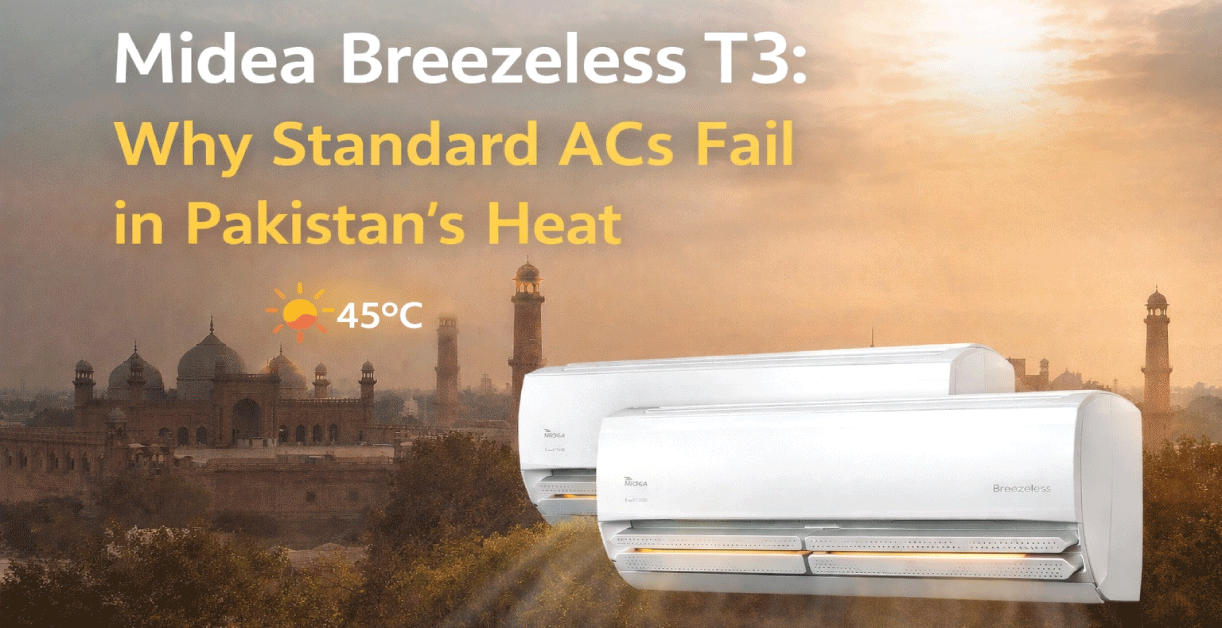
Picture a typical June afternoon in Lahore or Multan. The temperature hits 47°C. The roads shimmer with heat, the electricity grid is struggling, and load shedding warnings are everywhere.
You switch on your air conditioner hoping for relief.
But instead of cooling the room, the AC starts struggling, restarting, or blowing weak air. The compressor overheats, the cooling drops, and your electricity meter keeps running.
This is the harsh reality many Pakistani households face with standard air conditioners.
These units are designed for moderate climates — around 35°C to 40°C outdoor temperatures. Once the heat climbs beyond that range, their compressors lose efficiency.
What happens next?
- The AC keeps restarting
- Cooling becomes inconsistent
- Electricity consumption increases
- Your room feels like a fan is running instead of an AC
Meanwhile, your electricity bill keeps rising. With slab rates crossing Rs. 60–80 per unit, running an inefficient AC can cost hundreds of rupees daily.
Many homeowners are now shifting toward Midea DC Inverter AC models, especially those designed for extreme heat conditions.
This is why understanding T3 compressor technology matters.
The Engineering of T3: Why It Survives Extreme Heat
Not all compressors are built for the same environment.
A T1 compressor works in moderate weather. A T3 compressor is engineered for high-ambient climates like Pakistan and the Middle East.
The key difference lies in how the compressor handles heat pressure.
When outdoor temperatures rise, the outdoor unit of an AC can easily reach 55°C to 60°C.
At that temperature:
- Refrigerant pressure increases
- Compressor workload rises
- Cooling efficiency drops
A standard T1 compressor cannot maintain stable pressure under this stress. It starts overheating and eventually trips.
A T3 compressor, on the other hand, is designed with:
- Stronger motor insulation
- Higher heat tolerance
- Improved heat dissipation
- Stable refrigerant compression
This is why modern Midea Breezeless T3 models continue cooling even when temperatures cross 45°C to 50°C.T1 vs T3 in Real Life
T1 vs T3 in Real Life
| Condition | T1 AC | T3 AC |
| Outdoor temperature 45°C+ | Cooling drops | Stable cooling |
| Compressor behavior | Frequent restart | Continuous operation |
| Electricity use | Higher due to cycling | Lower due to stability |
| Comfort level | Weak cooling | Consistent temperature |
On a typical hot day:
- A struggling T1 unit may consume 12 units of electricity
- A stable T3 inverter system may consume around 6 units
The difference is not marketing. It’s engineering.
Why Quattro Inverter Technology Matters
Electricity in Pakistan is expensive.
For many middle-class families, the real question is not just cooling — it is how much the AC costs to run every month.
This is where Midea’s Quattro Inverter Technology comes into play.
Traditional ACs operate like a switch.
They:
- Turn ON at full power
- Cool the room quickly
- Turn OFF completely
- Restart again when temperature rises
Every restart requires a large burst of electricity.
This constant cycling increases both electricity consumption and compressor wear.
Inverter Cooling Works Differently
Instead of turning off, an inverter AC slows down its compressor once the room reaches the desired temperature.
This process is called frequency modulation.
In practical terms:
- Initial cooling may require higher power
- Once the room reaches 26°C, the compressor speed drops
- The system runs quietly at a low energy level
Many Midea inverter systems can reduce power usage to around 1.5 to 2 amps during maintenance mode.
This steady low-power operation saves electricity and prevents the heavy power spikes common in conventional systems.
Why This Matters for Pakistani Homes
Because electricity billing follows slab rates.
If your monthly consumption crosses a certain slab, your per-unit cost increases significantly.
By reducing unnecessary compressor cycling, inverter technology helps keep electricity usage within lower slabs.
It also works better with solar hybrid systems, because inverter ACs has low startup voltage requirements and smoother power draw.
For households running ACs on solar backup or during voltage fluctuations, this stability makes a major difference.
The Health Revolution: Breezeless Cooling
Anyone who has slept under a direct AC blast knows the problem.
You wake up with:
- A dry throat
- Blocked nose
- Body stiffness
- What people commonly call “AC flu.”
This happens because traditional ACs blow strong, direct airflow.
Midea’s Breezeless technology solves this problem with its TwinFlap™ system.
Instead of blasting cold air directly, the AC spreads airflow through thousands of micro-holes.
Think of it like this:
Direct blast:
Cold wind hitting your skin constantly.
Breezeless airflow:
Cool air gently spreading across the room like a cool mist.
The difference is noticeable, especially for:
- Children
- Elderly parents
- People who sleep directly under the AC
Night-Mode Science
At night, body temperature naturally drops around 3 AM.
Many Breezeless models combine airflow technology with Sleep Mode, which gradually adjusts the temperature to match the body’s natural rhythm.
This reduces sudden temperature changes and improves sleep comfort.
Durability in Pakistan’s Harsh Environment
Pakistan’s environment is tough on electronics.
In Karachi, salt-laden coastal air can corrode outdoor AC units.
In Punjab cities like Lahore or Faisalabad, dust and humidity clog condenser coils.
If the outdoor unit corrodes or gets blocked, cooling efficiency drops and maintenance costs increase.
Midea addresses this problem with anti-corrosion coatings such as PrimeGuard or Golden Fin.
These coatings protect the condenser from:
- Rust
- Salt exposure
- Moisture damage
- Dust buildup
This protection helps the AC maintain efficiency over years instead of failing after two or three seasons.
The Insulation Factor Most People Ignore
Even the best air conditioner cannot fight poor room design.
If your room has:
- A large west-facing glass window
- Poor roof insulation
- Direct sunlight exposure
the cooling load increases dramatically.
In such cases:
- A 1 Ton AC will struggle
- A 5 Ton or 2 Ton unit may be necessary
This is why professional installers often calculate heat load before recommending an AC.
The goal is to match cooling capacity with the actual thermal conditions of the room.
Choosing the Right Capacity
Selecting the right AC size is essential.
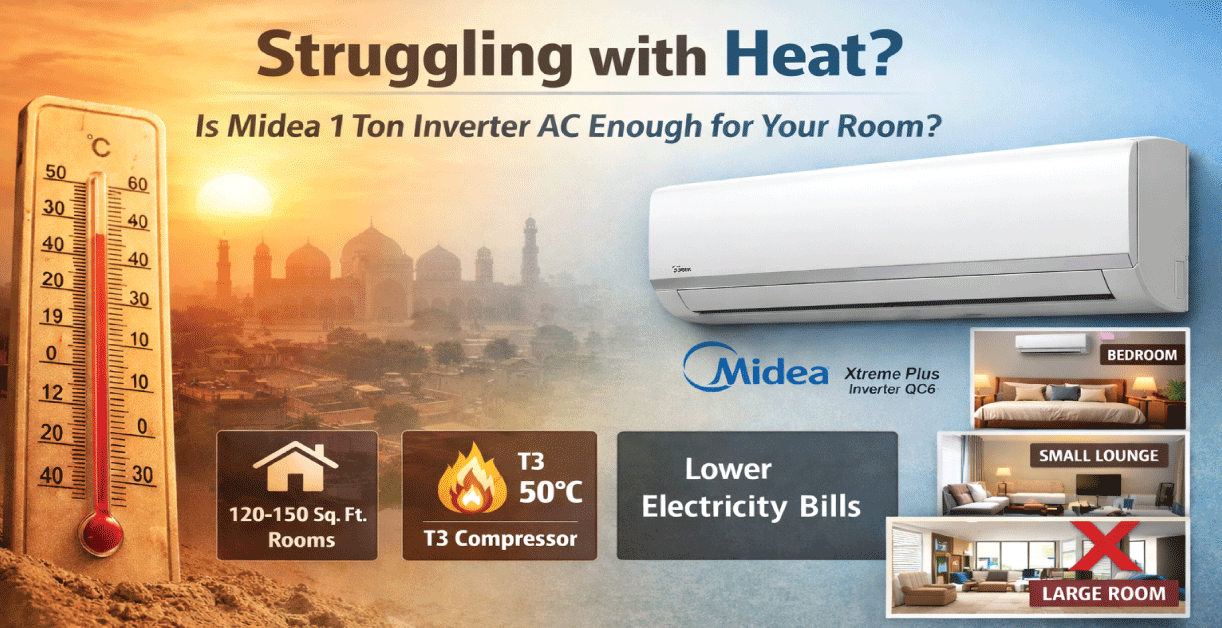
1 Ton AC
Best for:
- Small bedrooms
- Rooms under 120 sq ft
1.5 Ton AC
Ideal for:
- Medium bedrooms
- Standard living rooms
2 Ton AC
Suitable for:
- Large lounges
- Rooms with strong sunlight
If your room has large west-facing windows, you may need a higher capacity unit.
Midea AC Price in Lahore and Pakistan
Midea inverter AC prices vary depending on capacity and technology.
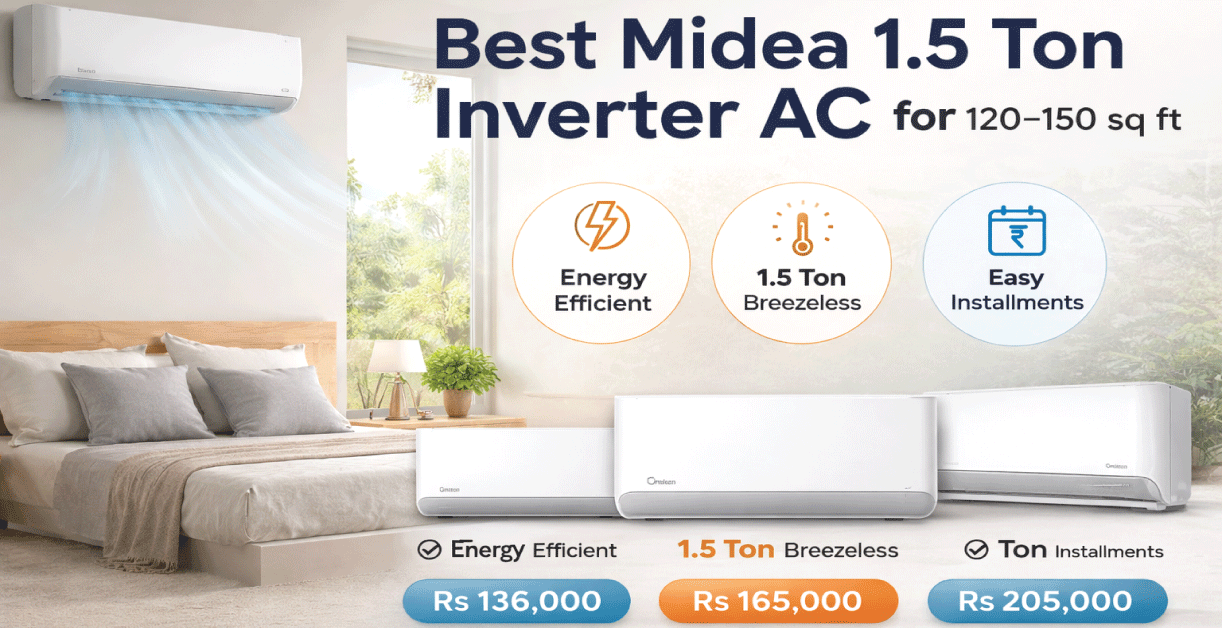
Currently, the Midea AC price in Lahore generally falls between Rs 136,000 and Rs 218,000, depending on whether you choose a 1 Ton, 1.5 Ton, or 2 Ton inverter model.
Customers comparing the Midea inverter AC price in Pakistan can explore available capacities and features before selecting the most suitable option for their room size and cooling needs.
Where to Buy Authentic Midea AC in Pakistan
Buying an AC is not just about the machine. It’s also about where you buy it from.
Authorized dealers like Lahore Centre ensure:
- Genuine Midea products
- Official 10-year compressor warranty
- Proper installation guidance
- After-sales support
Buying from unofficial sources may save a little upfront but often creates problems with warranty claims and service support later.
Your Top Queries
Shall I buy Midea AC on installments?
Yes, you can buy a Midea air conditioner on installments in Lahore from Lahore Centre, making it easier to upgrade your home cooling system.
Is Midea Breezeless AC compatible with solar systems?
Yes. Most inverter ACs, including Midea Breezeless models, can operate with solar hybrid systems as long as the inverter provides stable voltage output.
How long does a Midea inverter AC usually last?
With proper installation and regular servicing, a Midea inverter AC can last 8–12 years in typical Pakistani household conditions.
Does room insulation affect AC performance?
Yes. Poor insulation, large windows, and direct sunlight increase the cooling load. In such cases, choosing a higher capacity AC improves overall performance.
When is the best time to buy an AC in Pakistan?
The best time is before peak summer demand, when more models are available and prices are usually more stable.
Final Recommendation
If you live in Pakistan, especially in cities where summer temperatures cross 45°C, a standard AC simply cannot handle the environment efficiently.
A Midea air conditioner with T3 compressor system and inverter technology provides the stability needed for extreme heat, while Breezeless airflow improves comfort during long nights of cooling.