

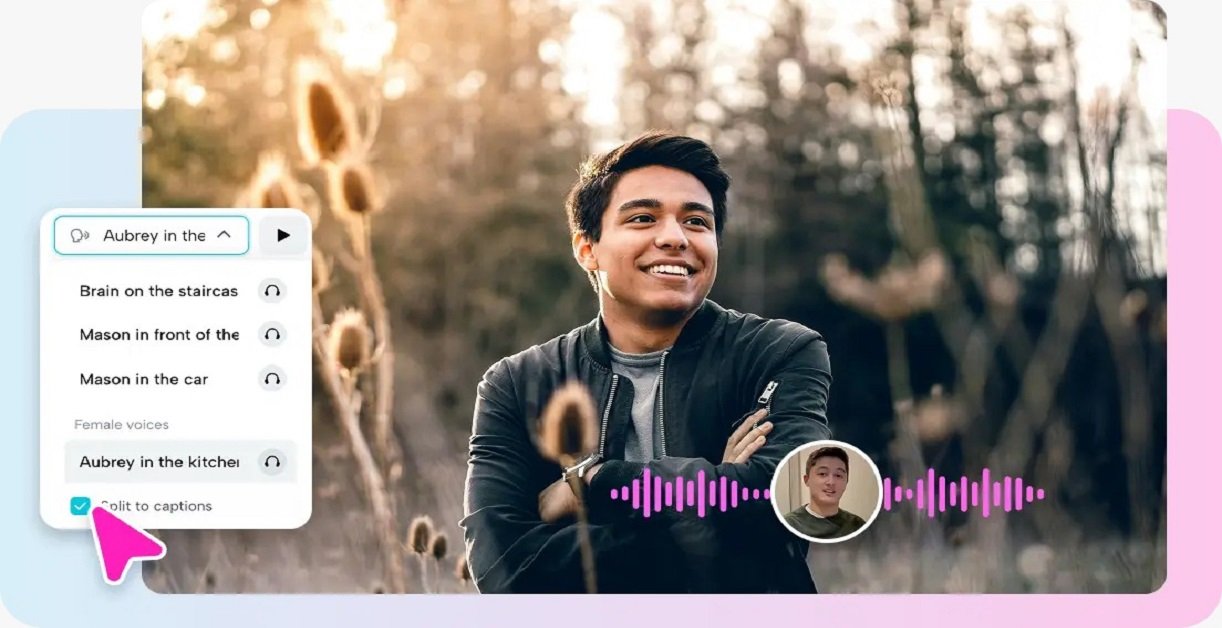
Captions are now a vital part of the new video communication. They increase understanding, interaction, and accessibility, particularly with more videos being consumed by viewers in subdued settings. Nevertheless, manual captions may be a tedious and time-consuming process of matching captions with audio and visual representations. Poorly oriented captions may interrupt a storytelling process, decrease viewer retention and even confuse significant information. Manually operated tools often do not provide the accuracy in time that professional-quality videos demand. Platforms like Pippit change this landscape with its intuitive AI video generator timeline editor, offering creators the ability to control captions with unprecedented accuracy and efficiency.
Why Caption Precision Matters in Video Communication
Proper captions are not just a transcription. To ensure that every word happens at the appropriate moment, they ensure that they add to the comprehension of the viewer. Accessibility is one of the enormous considerations because with captions, people with impaired hearing can enjoy the content. They also serve the non-native speakers so that they can track the context. Timing is a narration method that favours emotion, humour, or suspense through the conversation speed. Poor use of timing can confuse the viewer or ruin the mood of a scene. AI has a huge role to play in this as it automatically recognises voice patterns, scene transitions and contextual emphasis. It eliminates any distortion, and as such, captions will follow the video story. The technology enables creators to produce professional and easy-to-consume content and saves the creators significant chunks of time in the production process.
AI-Driven Caption Generation Inside Pippit
Pippit is an AI that provides scripts or voiceovers that are uploaded, automatically creating captions. This will remove the repetitive, tedious manual typing and time-consuming corrections. The site also accommodates various languages, with the site being highly linguistically accurate and grammatically correct in all the translations. Captions are uniform in terms of tone, space and pace. Pippit makes sure that the captions perfectly match the visuals when making tutorial material, promotion videos, or educational videos. By integrating features like photo to video AI, static images can be transformed into dynamic segments with synchronised captions, giving content creators the ability to produce engaging visual narratives without extra effort. This is a human error-reducing AI automation that also increases efficiency, so high-quality captions can be available to any project.
Timeline-Based Caption Editing for Granular Control
Pippit’s visual timeline enables accurate captioning at the beginning and ending points. Any word or phrase can be timed separately and provides unprecedented control without having any technical expertise. Rapid videos are no longer at risk of illegible captions, and timing may be adjusted to suit the speech and alternation of scenes. This grain control makes each caption readable and keeps up with the story. The timeline interface allows the user to edit captions and watch the video change instantly. This technique enables authors to ensure legibility even in difficult sequences or multiple-speaker dialogues, and the gap between automated captioning and human accuracy is reduced.
Steps to Control Captions Precisely Using An AI Video Generator Timeline Editor
Step 1: Open the AI generator and input captions
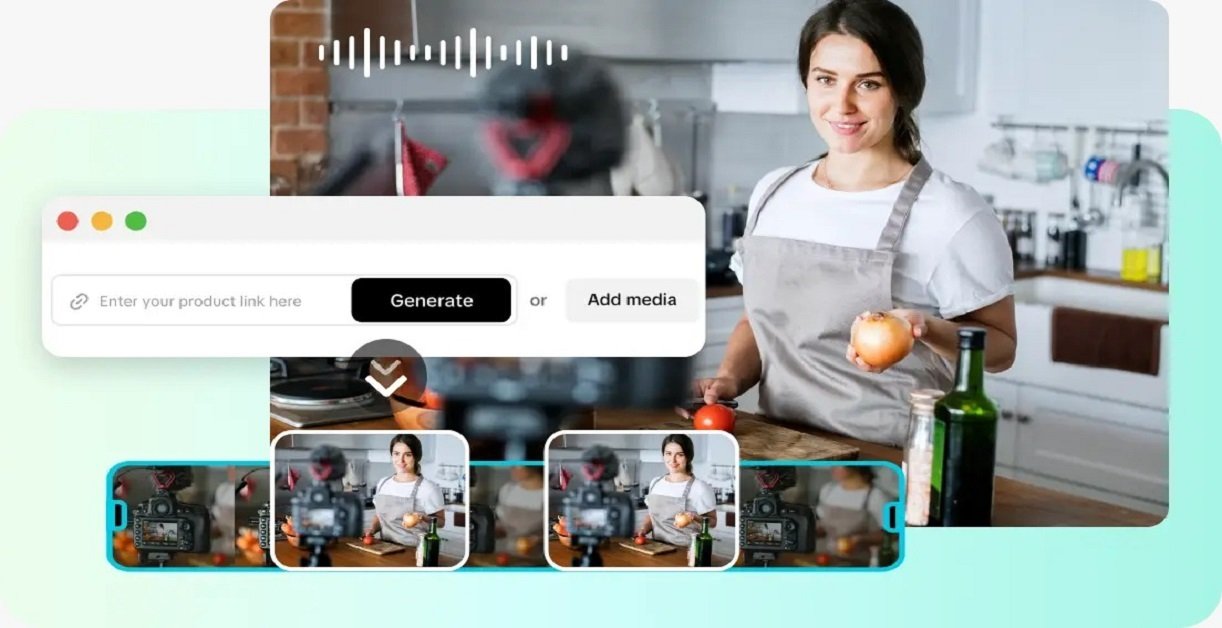
Begin by accessing the AI video generator and signing up. Go to the “Video generator” tab and enter a text prompt describing the content and style of your video. Upload reference media via the “Add media” tab from your local device, phone, Dropbox, or a link. If you lack reference media, select assets from the library. Click “Generate” to let the AI create a base video.
Step 2: AI adds initial captions automatically
The AI video editor automatically adds captions, avatars, voice, lyrics, and photos/videos while managing transitions, pacing, and video enhancements.
You will get 4 to 5 draft videos. Pick one and click “edit more” to open the timeline editor. Here, you can precisely control caption timing, duration, size, colour, and placement, ensuring every word aligns perfectly with the visuals.
Step 3: Adjust, export, and share
In the timeline editor, fine-tune all captions for readability and timing. Customise text effects or animation, alignments, and even add new captions manually.
Once everything looks perfect, use the “Export” tab to finish your video. Share it via “Publish” on social media or “Download” in your preferred custom format, frame rate, resolution, quality, and name.
Styling Captions Without Breaking Timing Accuracy
Pippit captions can be visually customised to ensure that the viewer remains focused but can still read the text. Font, size, colour, and positioning are options that can be adjusted without having an effect on the timing of each caption. Hierarchy, contrast and clarity are essential in order to make sure that captions add value and not distraction. The appropriate styling is what makes captions blend in with the visuals, and they enhance the storytelling rather than overwhelming it. Designers are able to explore designs without losing the rigorous compliance with audio and come up with refined outputs that can be used in professional presentations, marketing materials, and distribution to social media.
Managing Captions Across Multi-Scene Videos
Videos with multiple scenes or longer ones are supposed to be properly planned to avoid duplicated captions or clipping. The Piper timeline editor is consistent in the sequences, and the logic of a particular scene is reflected in the starting and ending captions. This avoids the sudden transitions or lack of dialogue, keeping the viewer in the same understanding of the video. Time accuracy ensures that captions are maintained in tandem with different story lines. Each scene is then regarded in a single workflow in Pippit, and it allows the authors to achieve extremely high levels of readability, understanding and engagement in complex work.
Short-Form and Vertical Video Caption Control
TikTok, Instagram reels, and YouTube shorts are short-length content that necessitate particular attention to the placement and timing of captions. The location of the safe zone is such that the captions do not interfere with key visual contents in the vertical screens. The timing will be forced to follow the clips at a fast pace, and it is essential that the captions are synchronised. These changes are automatic in Pippit, and creators can produce good vertical videos with trustworthy caption control. Additionally, integration with lip sync AI ensures dialogue and animated avatars match perfectly, delivering polished, professional-quality short-form content optimised for maximum viewer retention.
Conclusion
Exact caption management improves the overall quality and access of any video. Such platforms as Pippit offer AI-assisted timeline editing, enabling their creators to coordinate captions precisely, tweak visual look, and handle multi-scene projects with ease. Accurate captions make all the difference in educational content and in creating more effective short-form social media videos. Pippit brings a new generation of caption-first video production by integrating automation with fine-grained control. A video-driven future is accessible, accurate, and AI-oriented, which means that the content gets to its audience in an effective and professional way.