

The confusion around TV pricing in Pakistan doesn’t come from lack of options — it comes from misused terminology.
“UHD,” “Smart,” and “LED” are often treated as competing categories, even though they describe different layers of the same product.
That misunderstanding is exactly why many buyers either overpay for features they don’t need or buy cheaper models that fail to deliver the experience they expected.
This guide breaks down the real, measurable reasons behind the price difference between a UHD TV and a Smart LED TV
— without marketing noise.
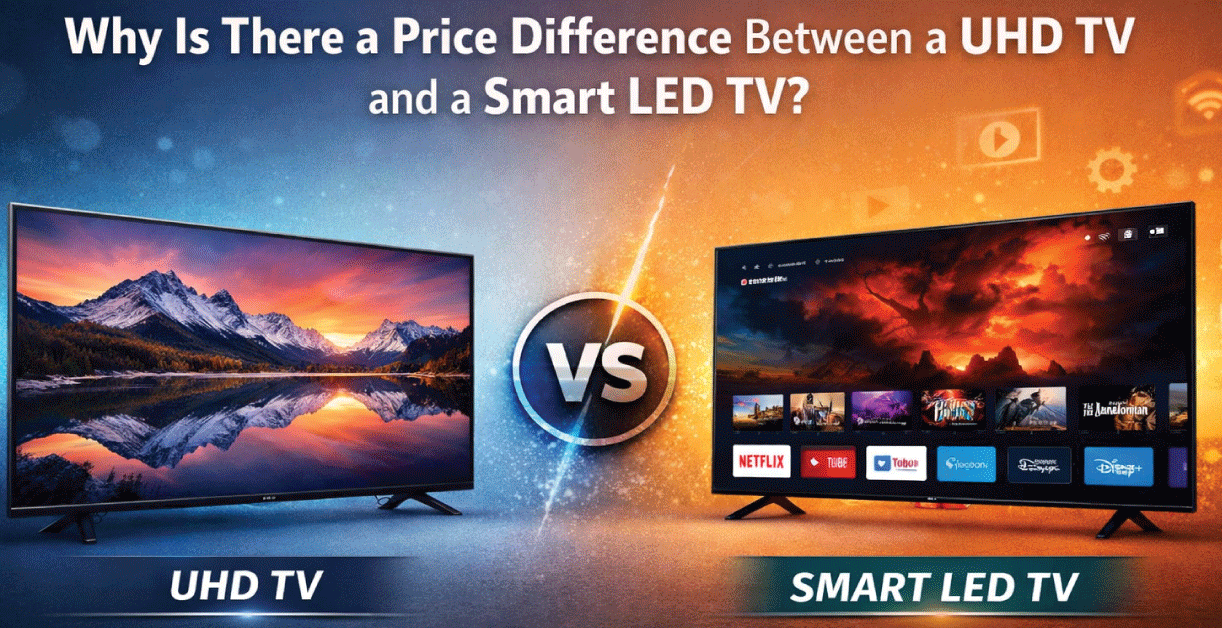
The Core Reality: These Are Not Opposite Categories
A smart LED model describes functionality. (Rs. 33,000 to Rs. 139,000)
A 4K (UHD) model describes resolution. (Rs. 87,000 up to Rs. 697,000)
Most televisions sold today are already smart and use LED panels. UHD simply means the screen supports 4K resolution. The price gap exists not because one option is “smarter,” but because higher resolution places greater demands on the hardware behind the screen.
That hardware is where costs rise.
Where the Price Difference Actually Comes From
1. Panel Capability, Not Pixel Count
A 4K panel carries four times the pixels of a Full HD panel, but the cost difference isn’t just about quantity. It’s about how consistently those pixels are controlled.
Higher-resolution panels require:
- More precise voltage regulation
- Better uniformity across the screen
- Stronger and more stable backlighting
Low-cost 4K panels exist, but they often compromise on brightness, contrast, and consistency. That’s why two TVs with the same resolution can sit in entirely different price brackets.
2. Processing Power and Real-World Upscaling
Most content watched in Pakistan is still:
- Cable TV (SD or HD)
- Mixed-quality streaming on YouTube
A 4K screen is only as good as its image processor. Higher-priced models invest in stronger processing to upscale lower-resolution content cleanly. Entry-level smart LED sets often rely on basic chips, which results in softer images even on high-resolution panels.
This processing layer rarely appears on spec sheets — but it’s one of the biggest contributors to price.
3. HDR, Dolby Vision, and Display Headroom
Pricing rises sharply once a TV is engineered to handle high dynamic range properly.
Supporting HDR or Dolby Vision isn’t about adding a logo. It requires:
- Higher peak brightness
- Better contrast control
- Stable color reproduction
Many budget 4K sets technically accept HDR signals but lack the brightness to display them correctly. Models that genuinely benefit from HDR sit higher in the price range by design.
If you want a focused breakdown of how these technologies affect picture quality, this connects directly to What Is HDR and Dolby Vision in LED TVs?
4. Smart Features Are No Longer the Cost Driver
Smart platforms used to add cost. They don’t anymore.
Android TV, Google TV, and built-in streaming apps are now standard across almost all price segments. The presence of Netflix or YouTube does not explain modern price differences.
What separates tiers today is display performance, not software.
5. Brand-Level Engineering and Reliability
Some models cost more because brands invest in:
- Consistent panel sourcing
- Better thermal management
- Longer product life cycles
- Stronger after-sales infrastructure
These factors don’t stand out in a showroom demo, but they matter over years of use. That’s why a well-built smart LED model can sometimes cost more than a basic 4K option.
How This Translates to LED TV Prices in Pakistan
In practical terms:
- Lower-priced smart LED models
Focus on affordability and basic viewing - Budget 4K options
Offer higher resolution with limited display performance - Mid-range 4K sets
Balance resolution, processing, and usable HDR - Higher-end models
Deliver consistent brightness, contrast, and long-term reliability
The price reflects how many of these layers are properly implemented, not a single feature.
Choosing the Right Option
- Mostly cable TV → a solid smart LED model is sufficient
- Heavy streaming → a 4K set with real HDR headroom matters
- Long-term use or installments → prioritize panel and processing quality over resolution alone
Resolution should never be the only deciding factor.
What to Check Before You Pay
Before comparing price tags, compare these:
- Panel consistency and brightness
- Processing and upscaling quality
- HDR capability (real, not just supported)
- Warranty and after-sales support
- Overall build reliability
These factors determine whether a TV will age well — or disappoint quickly.
Buying UHD and Smart LED TVs from Lahore Centre
At Lahore Centre, TVs are selected based on practical performance benchmarks, not feature lists.
Models are evaluated for:
- Real-world brightness
- Processing quality
- Panel consistency
- Reliability over time
This approach helps buyers understand why a TV costs what it does — and whether that cost makes sense for their usage.
Final Buying Perspective
The price difference between a UHD TV and a Smart LED TV exists because display technology is layered — not because one category is automatically better than the other.
When buyers understand where the money actually goes — panel quality, processing power, and display headroom — TV pricing starts to make sense. A smart purchase is never about choosing the highest resolution on paper. It’s about choosing the right balance of hardware for how you actually watch TV.
This is also why where you buy from matters as much as what you buy.
At Lahore Centre, one of the best electronics stores in Lahore, UHD TVs and Smart LED TVs are curated based on real-world performance, not just specifications on a box. Whether you’re comparing LED TV prices in Pakistan, exploring UHD models, or looking for installment options, buyers get access to verified models, clear guidance, and reliable after-sales support — all in one place.